
Ever feel completely stumped, facing a seemingly insurmountable problem? The frustration can be intense, especially when confronted with complex tasks like assembling IKEA furniture, which often feels like a battle against logic itself.
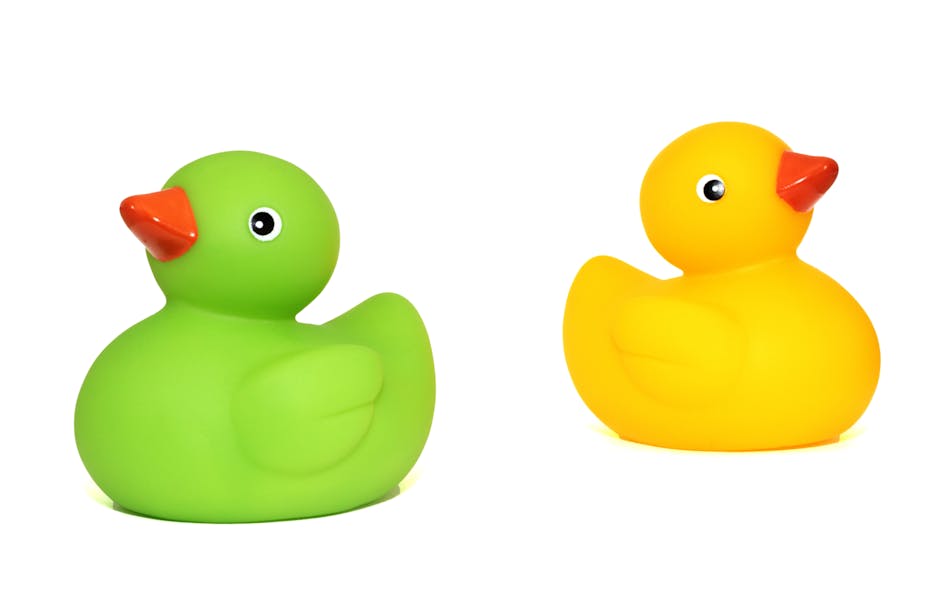
Recent studies suggest a surprisingly effective, albeit unconventional, approach to problem-solving: talking to a rubber duck. While initially dismissed as a whimsical suggestion, the concept is gaining traction in the world of productivity and cognitive psychology.
This simple act of vocalizing your thoughts and concerns to an inanimate object can offer a surprising clarity and path toward resolution. This isn't about replacing structured problem-solving methods, but rather exploring the potential benefits of a novel technique.
Imagine this scenario: You're deep in the throes of a challenging project, be it coding a complex algorithm, drafting a critical report, or just attempting to assemble a flat-pack wardrobe. The problem seems intractable, and your frustration mounts.
In this state of mental inertia, the rubber duck, a seemingly passive participant, can act as a powerful catalyst for your mental processes. The act of verbalizing your thoughts, even to a seemingly uninterested observer, forces you to articulate your problem in a clearer, more structured manner.
This process, known as the 'rubber duck debugging' technique, is surprisingly effective in highlighting potential blind spots in your understanding of the problem. By verbalizing your reasoning, you're forced to confront ambiguities, contradictions, and potential errors in your approach.
Why is this so effective? The act of explaining the issue aloud, to a non-judgmental listener, prompts a metacognitive process. This internal reflection allows you to approach the issue with a fresh perspective, sometimes exposing hidden assumptions or flaws in your logic.
The rubber duck doesn't offer solutions; it's an empathetic ear, encouraging you to articulate the problem more clearly and concisely. This exercise can be just as effective as discussing the issue with a colleague, although the absence of judgment might make it even more liberating.
Think of it like a mental mirror. The act of explaining your problem to an inanimate object forces you to confront the problem itself. You identify the root causes and potential solutions in a clearer manner.
Furthermore, the rubber duck method doesn't pressure you to come up with an immediate solution. The process of articulating your thoughts allows you to explore different angles and possibilities without the fear of judgment or interruption.
The rubber duck method can also be seen as an exercise in clarity. It helps you articulate your thoughts, which in turn can help structure your approach and improve your ability to pinpoint the exact nature of the problem.
Of course, the effectiveness of the rubber duck method isn't limited to simple household tasks. It can be incredibly helpful in complex technical problems, challenging creative endeavors, or even personal dilemmas.
The next time you find yourself stuck on a problem, consider this unconventional approach. Take a moment to verbalize your thoughts to a friendly rubber duck (or any inanimate object). You might be surprised by the insights that emerge.
The key takeaway here isn't just about talking to a rubber duck; it's about the power of articulating your thoughts and processes. This simple technique can enhance problem-solving skills, improve clarity, and lead to more effective decision-making.
Ultimately, the rubber duck method highlights the importance of metacognition and the power of deliberate articulation in overcoming challenges. It's a reminder that even seemingly simple actions can have profound effects on our ability to tackle complex problems.
So, next time you're stuck on a problem, don't hesitate to grab a rubber duck and start talking. You might be surprised at how much clearer the path forward becomes.
This approach, while seemingly trivial, emphasizes the crucial role of clear articulation and reflective thought processes in problem-solving, especially in highly technical or nuanced scenarios. It reminds us that simplicity and clarity can be potent tools in even the most complex problems.
In conclusion, embracing unconventional strategies like talking to a rubber duck can bring fresh perspective and clarity to challenging situations. It's a testament to the importance of metacognitive processes and a reminder that seemingly simple techniques can yield significant improvements in our approach to problem-solving.